Friday, July 31, 2020

Peace and Wounds

This morning I'm thinking about Our Lord's appearance to the eleven in the upper room, after the resurrection:
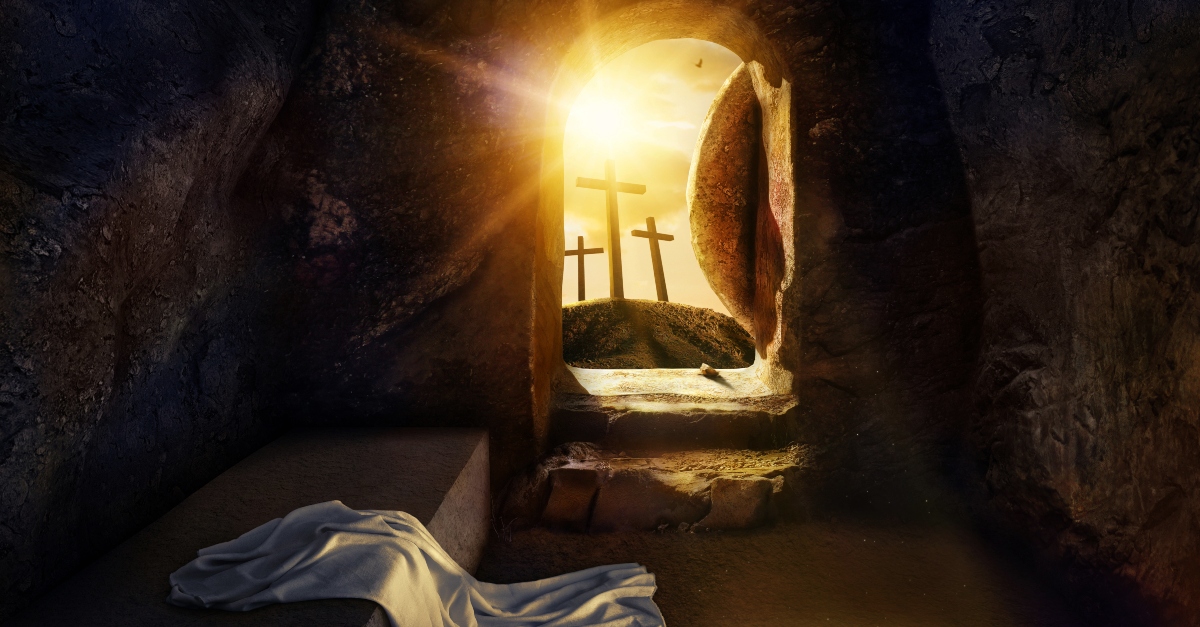
On the evening of that first day of the week, when the doors were locked ... Jesus came and stood in their midst and said to them, “Peace be with you.” When he had said this, he showed them his hands and his side. The disciples rejoiced when they saw the Lord. [Jesus] said to them again, “Peace be with you. As the Father has sent me, so I send you.” And when he had said this, he breathed on them and said to them, “Receive the holy Spirit. Whose sins you forgive are forgiven them, and whose sins you retain are retained.” (Jn 20:18-23)
Which is to say, I'm thinking about the wounds in my own life that need healing, and what Our Lord teaches us in His actions about the importance of reconciliation. So, while I'm writing just to work through this in my own life, I'd also like to share some thoughts.

I guess the first thing that occurs to me here is that phrase, the doors were locked. Isn't that always the case in times of conflict? We hide behind locked doors, out of a place of shame or regret or distrust. We get wounded, and rather than immediately reaching out we lock ourselves away. And the wound festers.

What's worse is all that is said in the unspoken words. As we lock ourselves away to heal, we find that healing is not a solitary action. Silence may give us time to make peace with God and stitch ourselves up, but it doesn't bring us real healing. Instead, we begin to make assumptions about what is done and left undone - their intentions and attitudes; subsequent encounters with them; we even question the basis of the relationship and begin seeing even wounds that had previously been healed begin to surface.

Each party finds themselves waiting for the other to reach out, to be the first to build a bridge - and of course, nobody wants to do that because that involves stepping into the unknown realm of will they forgive me? will they apologize? will we be able to recover? As I said, we hide out of distrust.

It is into this locked room full of fear and distrust that Our Lord enters - and mysteriously, He enters speaking Peace. There is so much that could be said about this Shalom, about the unexpected and radical mercy being offered. It is an invitation, of course; but beyond that, I think it also serves as a reminder that the Christian life must be lived in relation to others, and - especially within the Mystical Body of Christ - we should be anxious to reconcile and restore, because what affects one of us affects the entire Body.

All this being said ... I think it would be a mistake to see this Shalom as an excuse to move on without addressing the elephant in the room. I know on an important level, Our Lord showing His wounds is about demonstrating the bodily Resurrection; but beyond that reading, we can see how necessary it is to acknowledge the wounds we have received at the hands of others. It is an act of vulnerability to show others where we have been hurt, inviting them to a place of compassion and empathy, and inviting them to realize the need for reconciliation. We can't just move on, and the peace being offered needs to come with a humble admittance that there is brokenness that requires healing. Otherwise it's just words.

How crucial is it, though, that Our Lord shows His wounds without coming from a place of woundedness? This is not a lashing out - no accusations or finger-pointing, no shouting. Certainly no veiled threat that His offering of peace is contingent on their asking forgiveness. But it occurs to me that He didn't even specifically state what they had or hadn't done; rather, He showed the wounds He had received and invited them to come to see the fault of their inaction in light of their sorrow at the pain He endured.

~~~~~~~~~~~~~~~~~~~~~~~~~~~~~~~~~~

Friends, there are some wounds within the Body of Christ this evening (as if this is at all a surprise). I think it is so much more complicated within the Church, because there is such a temptation to just move on and seek that artificial half-peace of pretending the wounds aren't there. Or generally avoiding dealing with them, as if they will go away. There is a place for giving time to heal and return with cooler heads, but at some point you have to properly heal, rather than simply patching over it.

I have to confess that - insofar as I see myself in this story as Christ - the one wounded - I failed to be Christ. I waited longer than I should have to reach out and offer peace, which just made things awkward for a bit. And when I offered the peace, there were no words that went along with it - nor was there any acknowledgement of what had happened and the wounds I have experienced. I still have the intention of doing so, but I am distinctly aware that the Enemy is clever and makes us avoid these opportunities for reconciliation because of further fear of rejection.

Of course, the reality is that I am also the disciples locked in the upper room - avoiding doing my part, avoiding acknowledging my own responsibility in the situation, and wishing I wouldn't have to be the one to move first. When it was pointed out recently that I hadn't done my part or left the metaphorical room, I have to confess that my initial reaction was from that place of woundedness - shouting where were you?

So much for blessed are the meek (or peacemakers, or poor in spirit). Brother Francis, pray for me!

It's funny, in a way, how a situation can get so confused and uncomfortable without any real interaction even taking place - just festering. You think I would know this by now, because I've been here before in my divorce.

So, here we are, preparing to move up the stairs and knock - or coming to the door and opening it - depending on which side of the door I see myself on at the moment. Uncomfortable conversations are uncomfortable, but I would much rather grace flow freely again than leave these wounds in the Body of Christ.


Sunday, May 10, 2020

My Mother

What do I do or say to even attempt to repay my Mom for what she has done for me? Do I tell her of all the ways she has shaped me? Do I recount my favorite memories? How about sharing my appreciation for every ounce of love she poured out - many of which I used to roll my eyes at (or worse, ask her to stop)?

Honestly, there is so much to say about my Mother. And since I could never so much as approach being able to return her love for me, I'd like to just tell you all about her - what makes her my Mother.

  • She loves telling stories, often the same ones she has shared dozens of times before - but they say something about what she considers most memorable.
  • So much of herself is wound up in those who she loves. Past experience tells me that asking what is new in her life will result in her telling me all about others who are on her heart.
  • She sometimes keeps her distance out of fear of being overbearing (which she wouldn't be) or crossing boundaries (which deserve to be torn down anyways).
  • The first thing she tells me when I visit - which isn't nearly often enough - is where I can find coffee for the morning, and what there is to eat. The guest bed is always made, and there are always fresh towels in the bathroom.
  • She taught me how to fold sheets, and how to put them on the bed (though for the life of me I still never figured out hospital corners).
  • She loves getting flowers as a gift, but always worries about killing them.
  • When I was growing up she drove an hour each way to work 9 hours a day, and still came home and made dinner for us. She also took every other Friday afternoon off.
  • She taught me to crochet and use a sewing machine (though I am out of practice on both), and my favorite afghan growing up was one she made for me.
  • Once in college I didn't call for a few weeks (months?). She emailed me a form letter with blanks for me to fill in - to which my immediate reaction was oh no, I messed up.
  • At some point in life, she got the impression I loved macadamia nuts. From that point on, every Christmas stocking and care package included a jar of macadamia nuts. It wasn't until years later that I told her I don't really care for them all that much, but never had the heart to say anything.
  • She used to be part of the church choir, and loves singing along to songs in the car. She has a beautiful singing voice, and I still remember her rocking and singing me to sleep when I was young.
  • Christmas Eve found Mom up in her bedroom wrapping presents with the door mostly closed. The room was off-limits right up to the point that our presents were taken care of, at which point I could come in and watch TV and get help with my wrapping. I always got to be her thumb when she was tying bows.
  • My Mom has always had tight shoulders and neck pain, and growing up with that meant I learned how to give (and receive) shoulder rubs. I remember sitting at the top of the stairs and helping each other out with knots.
  • My Mom taught me to love cooking, though she would say these days I'm better at it than she is.
  • When I was a Junior in High School I broke my dominant hand. For the weeks I couldn't write, she acted as scribe for my math homework.
  • She was there at every soccer game, taekwando competition, gymnastics meet. She was there for every practice.
  • She knew how to make my favorite sandwich, which was an incomprehensible combination of baloney, cheese, and a variety of condiments (including grape jelly). Talk about sacrificial love.
  • She loves playing games, and was unbelievably patient with me when I was a kid - allowing me to bring out the dictionary when it was my turn in Scrabble. Especially now that I have a son who is inclined to "take his time", I appreciate so much more how difficult that was.
  • She supported me in my conversion, and was there when I was Confirmed at the Easter Vigil. I don't know how she managed that one, because I'm sure part of her was breaking realizing we wouldn't be able to receive the Eucharist together anymore, but she was there, pouring herself out yet again, as she always has.
  • She is kind, warm, and thoughtful. She worries about her children and always puts them first. She will support us through anything.
    It must be so hard to be a Mother, being so near to your children - so near that you physically carry them the first 9 months - then watching them slowly move further away from you the rest of their lives. Wanting to pour yourself out and yet finding your love not always welcomed or received. I suspect she still bears parts of my sister and me, even from miles apart.

    When I was younger she took care of me. She was protector, nurse, comforter, tender-of-hangnails, tissue-holder. These days, I'm older and more independent, and I think our relationship has changed in some ways. I'd like to think it has just matured. I have more to offer her in return, though I could never come close to all she has given me. I'm stronger and more capable than I was when she used to tie my shoes and comb my hair, so the things I need from her are different.

    I try to give the impression I am a capable adult who has it all together, but she still is able to find all the spots in my house that need cleaning when she visits.

    But I still need my Mother to be my Mother, and I have so much still to learn from her.

    Sunday, April 12, 2020

    Easter in the Desert

    Today is Easter, and in Atlanta it's raining. More to it, we are stuck inside because of the shelter-in-place order, and unable to worship in Church. Many are unable to celebrate at all, because they are fighting illness or suddenly unemployed. It feels like we are still in the desert, remarked Father this morning in his homily.

    And yet we still celebrate - we still rejoice, shouting Alleluia! as we ring bells and sing.

    I was talking with a woman a few months ago during Advent, who was puzzled about the reasons we enter into the desert of Lent, or the darkness of Advent. She rejoices in a risen Christ, a world where light has already entered and the promise of salvation already attained. And she wondered - what is the point of the drama? Why bother acting as if God was not with us when He is?

    Personally, I think it is crucial to our faith to enter into the Liturgical Year, because life isn't Easter eggs and butterflies and flowers (this year is certainly teaching us as much). Most days, we don't get excitement and the pleasant surprise of the resurrection. We get the dull monotony of yet another day that seems like every day that came before. We get the pain of an unexpected diagnosis, or divorce, or death.

    The Liturgical Year intentionally walks through much of scripture - and we are encouraged to take up and read as well - for exactly this reason. When we read through salvation history and God's self-revelation through scripture - the good, bad, and ugly - we see how God was at work, even when life was bleak. Judges, Lamentations, Job: they all tell the ways that God was working even when all seemed hopeless.

    This is meant to encourage us, just as much as the resurrection - although, perhaps it only can encourage us in light of the resurrection.

    God allowed the Fall, to give us the resurrection.
    He allowed the slavery of Israel by Egypt, to give us the resurrection.
    He allowed the split of the Kingdom, to give us the resurrection.
    He allowed the destruction of the Temple, to give us the resurrection.
    He allowed the exile, to give us the resurrection.
    He allowed the Crucifixion, to give us the resurrection.
    O Happy Fault that merited such and so great a Redeemer!
    You know, it occurred to me that - yes, this current pandemic is clearly the worst thing much of the world, collectively, has lived through. But we all have tragedies. Darkness is just as much a part of life as light. It doesn't take a global catastrophe to give us a need for hope, it simply takes a single moment that brings us to our knees and makes us wonder - why, God?

    The resurrection give us hope that in all things God is working for your good, that He is for you, that He loves you, that He has not forgotten you.

    Rejoice in the Lord always, urges Saint Paul. Christ is the Divine Bridegroom, and we are His bride, pledging our fidelity. For better, for worse, for richer, for poorer, in sickness and in health.

    It is raining in Atlanta today on Easter, and we are living in dark times; and still we will celebrate, for what God is doing even here and now - all in light of the resurrection. Christ is risen; He is truly risen, alleluia!


    Saturday, April 11, 2020

    Waiting - Triduum Journal (Holy Saturday, 40/40)

    Holy Saturday is a day of waiting. We wait to sing the Alleluia. [1] We wait to celebrate Christ's resurrection. We wait to feast and rejoice and turn the lights on.

    It seems fitting, seeing as we are also waiting for the end of this epidemic. Waiting for health updates of those we worry about. Waiting to visit friends and family. Waiting for the lifting of restrictions. Waiting for churches and businesses to re-open. Waiting to receive the Eucharist. Some types of "waiting" are more painful than others, require more patience and cost more of our emotional strength.

    But you know, today we also remember the years that Jesus waited for us. As eager as Christ was to save us, it's a wonder He took as long as He did in order to begin. He waited 30 years before beginning his public ministry, but I can just imagine him as a kid, asking Mary and Joseph - Can I redeem them today, Mom? No, beloved child; today's not the day either.


    But even that waiting was nothing, because God "waited" [2] through millennia, slowly revealing Himself to us. The Easter Vigil offers us a brief glimpse at salvation history - "the great rescue operation" - Creation; Fall; Flood; Sacrifice; Covenant; Kingdom; Exile. We see the way God formed a people, Israel, who would seek after His heart and image His love to the nations. But it took ages, and we can't conceive of the reasons God determined to bring about our redemption the way He did. God waited for the right moment, knowing His chosen people would turn away again and again, and He always calling them back - reminding them of His love for them.

    We remember the centuries Israel waited for the Messiah - the centuries after the kingdom split. The ten Northern tribes captured and scattered. The Southern tribe of Judah exiled to Babylon, the Temple destroyed, and the line of kings shattered. The rebuilding of the Temple, but without God's presence - without the Ark. Waiting through conqueror after conqueror. [3]

    And now, we know how the story ends - Jesus Christ, True God and True Man, who takes the sin of the world unto Himself. He performed signs and wonders, taught, preached, cast out demons, and forgave sins, all while proclaiming the Kingdom of God. Through all this, His ministry interminably led Him to Jerusalem; wherein He was ultimately condemned to death for blasphemy - for declaring Himself the Son of God. He carried the weight of all our guilt to Calvary and offered His life for our sake out of love for you and me.

    But even that wasn't the end, because tonight we celebrate the monumental and unthinkable fact of His resurrection - the Empty Tomb. He defeated sin and death, taking on the worst of all - and each - of us, swallowing it up and showing only His Mercy in its place. Incredibly, God shows us that He redeems all the broken bits of ourselves, making them beautiful.


    But still, we wait. And He waits. We may know the end of the story - Satan defeated, our resurrections, a New Heavens and New Creation, every tear wiped away for all eternity - but we haven't reached the end yet. We are still living in the midst of a story that continues until God only knows when. He continues to call us to repentance, to salvation, to receiving His life into our very being.

    So here we are, on Holy Saturday, remembering all the waitings that have been, are, and will be; knowing what will come tomorrow, but knowing that we are not yet there.

    Let us continue to wait.

    [1] It's not time yet, so I don't want to spoil it
    [2] It appeared that way to us, at least. Being outside of time, there is no concept of God waiting. Just saying.
    [3] If you haven't read the whole of scripture, I encourage you to do so - it's beautiful, if viewed through the proper lens.

    Friday, April 10, 2020

    Life and Death United - Triduum Journal (Good Friday, 39/40)

    Lord, the day you died ... the world went on turning. Infants were born. Fish-mongers continued selling fish. Shepherds continued tending their flocks. The sun continued to burn, and You continued to sustain the cosmos.

    Somehow, everyone kept breathing, even as You gave up your spirit.

    On a day that should have resulted in the end of everything, much of the world didn't even take note. People had their own problems, their own hopes, their own lives.

    Isn't it so utterly mysterious? Today we celebrate what was humanity's most tragic moment, when we looked at God-become-man and spat in Your face as You longed to redeem and love us back to life. Even on an earthly level, we condemned an innocent man to death and abandoned him.

    Not all. Not all abandoned You. The women devoted to You were there - all of them. John, the beloved disciple, was there. Simon of Cyrene - even if he was conscripted - still faithfully bore Your cross and eased the journey up to Calvary. But most of us turned against You.

    ~~~~~~~~~~~~~~~~~~~~~~~~~~~~~~~~~~~~~~~~~~~~~

    And yet You died for them. For all. For each of us. Your devotion to us was total, and as You hung from the tree You offered Yourself entirely to us.

    That tree. I would want to curse it, if it weren't such a beautiful gift. You deserved better - infinitely better - and yet You embraced it, knowing all that would come because of it.

    I would want to take Your place. Or ease Your suffering. Or find another way, a better way, so You could continue living. You, whose life was most precious. Come down from the Cross, Lord. How could anything good possibly come of this moment happening this way to You? It is so easy to see only the finality to death, forgetting the resurrection.

    But we know how that would have gone. Get behind me, Satan, You said to Peter when he made the same offer. You are setting your mind not on divine things but on human things.

    ~~~~~~~~~~~~~~~~~~~~~~~~~~~~~~~~~~~~~~~~~~~~~

    We have thousands of doctors, nurses, surgeons, and others who are living their own Good Fridays today. Offering their lives for the sake of their patients, selflessly giving up everything for the sake of the other. Thousands of people will die today, many of them alone or abandoned. They have borne our infirmities and carried our diseases. To see the gift of their lives as only a tragedy (which it certainly is) would be a mistake. There is so much life that will grow from these sacrifices.

    If this world is all there is - if this earthly life is all there is - the Cross is senseless. Suffering and death are meaningless. There would be no reason to endure any of it, no ultimate purpose besides the ugliness.

    Your vision is different. If the ultimate purpose of life is love, which is to say death to self, the Cross is everything. The greater the Cross, the greater the opportunity for love. The more suffering endured, the more we can find ourselves seeking God and faithfully uniting ourselves with You, who suffered most.

    This is how we find true life, You tell us, in marrying ourselves to You. Just as You offer us everything - all that You are, and all that You have - we do the same in return. We find life in giving ourselves away, just as You did.


    Thursday, April 9, 2020

    Stripping the Altar - Triduum Journal (Maundy Thursday, 38/40)

    I'm finding it especially difficult to write about the Triduum this year.

    My initial instinct on Maundy Thursday would be to talk about the importance of spending time with Jesus in the garden, honoring him for the agony he endured alone and promising to never leave him that way again. I do intend to spend a Holy Hour this evening in prayer in front of the church - as near as I can get to what I want this night to be - but it won't be the same. It feels like that has been stripped away.

    Following that, I want to write about Jesus washing the feet of the disciples - the importance of his example of servant leadership. The need for humility and vulnerability when all we have been taught is the importance of standing on our own. But for so many of us at the moment, servanthood means being at home. So it feels a bit like that, too, has been stripped away.

    Obviously we could also talk about the Eucharist - the importance of Jesus instituting it at Passover, and seeing Jesus as the true sacrificial Lamb of God, whose flesh we must eat and whose blood washes us clean. The Church still has the Eucharist, but most of us can't receive at the moment. Yet another aspect of tonight that has been stripped away.

    We could talk about how today we also celebrated the institution of the ordained priesthood. There are so many beautiful examples right now of shepherds putting their lives on the line for the sake of their flocks, and we could emphasize just how wonderful it is that we have these men who trust Our Lord so much. But the primary purpose of the priesthood is the sacraments, and while that hasn't strictly been stripped away, our access to the sacramental life of the Church has been greatly limited.

    So I guess that leaves the stripping of the altar and the removing of the Blessed Sacrament, two of the most somber moments from the Maundy Thursday liturgy. There is something so stark about seeing the Church emptied of all color and stripped down to its bare wood and stone, and I think this year especially the image is so poignant.


    Frankly, we're already living that.

    We've been living with a stripped-down Church and a stripped-down life the past few weeks, and I know just how hard it is to see one thing after another taken away. We have entered into the Maundy Thursday liturgy, and we're just ready to move on to Easter Sunday - the renewal of color, and warmth, and life.

    This stripping-down is something to embrace, because it will lead to resurrection. The Church strips the altar as the soldiers stripped Our Lord. In the same way, we can strip the altars of our hearts - removing all the stuff and leaving behind the bare basics.

    Here is our opportunity. Tonight, we can dim the lights. We can turn off the computer and the music and empty ourselves the way our Churches are empty. In place, we can let Our Lord fill us with His presence the way He fills the tabernacle. We can become an Altar of Repose ourselves, where Jesus rests this night.

    Tonight, we may not have much that we want. But we still have all that we need.


    Wednesday, April 8, 2020

    All the Difference - Lent Journal (Spy Wednesday - 37/40)

    When it was evening, he reclined at table with the Twelve. And while they were eating, he said, “Amen, I say to you, one of you will betray me.” Deeply distressed at this, they began to say to him one after another, “Surely it is not I, Lord?” He said in reply, “He who has dipped his hand into the dish with me is the one who will betray me. The Son of Man indeed goes, as it is written of him, but woe to that man by whom the Son of Man is betrayed. It would be better for that man if he had never been born.” Then Judas, his betrayer, said in reply, “Surely it is not I, Rabbi?” He answered, “You have said so.” (Mt 26:20-25)
    What do you think got Judas to the point that he no longer recognized Jesus as Lord? How long had he been following him as a disciple, but simply going through the motions? Regardless, when it came down to the end - to the upper room, Passover, and the Last Supper - he shows his hand in calling Jesus "Rabbi".

    The difference is everything.

    One says that Jesus is a great teacher, prophet, healer - perhaps even Messiah - and there is respect in that. But the other recognizes the qualitative difference, that Jesus is God.

    One recognizes that there are great spiritual insights to be learned from this man. But the other declares that this man can forgive sins and defeat death.

    But I do still wonder: what was Judas's fall? Did it begin when Peter declared Jesus's divinity? Was it the Bread of Life Discourse (John 6)? Was it disillusionment with the type of kingdom that the Son of David was establishing? Was it when Jesus asked his disciples to take up their crosses and follow him? Maybe it was just all the rules?

    I think the question for us is: are there any conditions where we would stop seeing Jesus as Lord? Or, I guess a better way to frame the question: are there conditions where we would stop serving Jesus as Lord? We have to confront that question and identify the answer, then ask for the grace of faith to invite Him into that place of weakness.

    What was the moment where the rest of the twelve truly gave themselves to Him? In the meanwhile, Judas straggled behind. Maybe he hoped he would eventually get it. Maybe he started looking for an opportunity to take advantage.

    Either way, he stopped trusting Jesus and began trusting himself. Because if Jesus isn't Lord, then he is no more authority than any other great guru. He certainly isn't someone you devote your entire self to serving. In doing so, Judas cut himself off from hope, because he lost sight of God's vision for us.

    Judas lowered his eyes - lowered his desires - to something less than what was on offer, because he didn't recognize that it was being offered in the person of Jesus: redemption, sanctification, and finally being whole.

    The rest of the twelve betrayed Jesus as well in abandoning him in the Garden. Peter even denied knowing him altogether. They weren't perfect, and they needed years of grace poured into them to become the great Saints they became. Their failures were never the issue, because God's mercy is greater than our weaknesses. They repented, asked for forgiveness, were reconciled, and started again.

    But we have to know that forgiveness is being extended, so we don't despair when we inevitably fall short. We have to look upward and outward, rather than settling. Knowing who Jesus is makes all the difference.