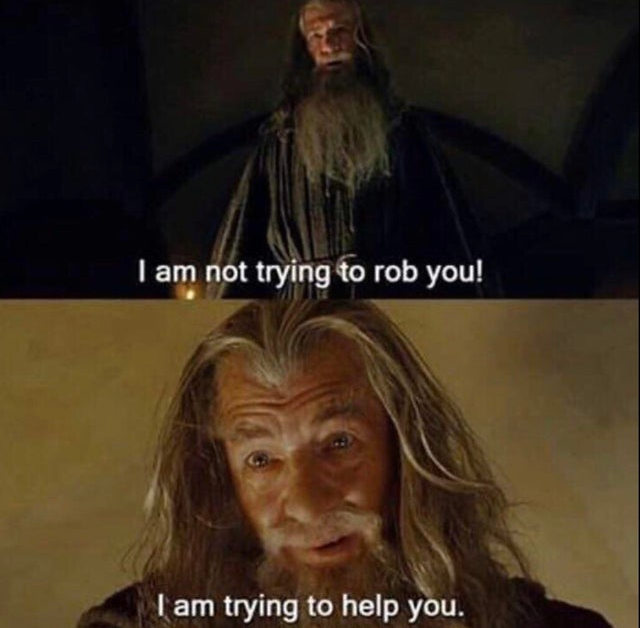
I think one of the most common criticisms I have heard of the Catholic Church is "so many rules".
When outsiders look at the Church, they see the "Church of NO" - in particular, no fun. I'm dating myself, but Billy Joel even wrote a song about this [1].
When I first converted, I could tell you the rules and probably even give you a poor explanation of why those rules exist - but I didn't delight in them or see how they would necessarily be beneficial or lead to my flourishing.
The fundamental claim the Church presents in Her arguments on morality are that God has given us guardrails that protect us from harm, guideposts that keep us on the path of holiness. Which sounds great you are looking for Sainthood, but doesn't necessarily say anything about the joy that is meant to come with a virtuous life. After all, a life of holiness should in some way reflect the excitement and joy that we will experience for eternity in Heaven.
So is the Church really insisting that life should be boring when declaring certain sensual pleasures as evil?
Underneath that question is the same question provided by the serpent in the Garden - God is holding out on us. He wants us to be automatons and slaves, doing what we are told; we should fear stepping out of line because of the punishments that await us should we fail, which we all do.
~~~~~~~~~~~~~~~~~~~~~~~~~~~~~~~~~~~~~~
I think one of the fundamental questions of the moral life is - are the rules arbitrary? Is something wrong simply because God says it is? If so, can the rules be changeable? Are the rules more like traffic laws - inconvenient and a hindrance? Or, are they more like the laws of physics - the way that things aught to behave when working properly?
When I de-transitioned and became Catholic, I didn't understand exactly what was being offered. All I could see was God this rule - not transitioning - and the reward of heaven if I followed. Which certainly is partially correct, but I think the true challenge is coming to understand that this rule is really about something more basic.
Instead of trying to keep me down, God is trying to show me that I am good, not a mistake that needs fixing.
To be frank I don't like typing those words because I know how they sound. I used to roll my eyes at that phrase - you are not a mistake - because I knew myself, and I knew better, that to be fulfilled and happy I had to change. I can't underscore enough that if you are transgender and reading these words, I understand what you are going through, because I've been there. I know the pain, I know the feeling of disconnect, I know the feeling of loneliness and the ache of needing to do something, anything to survive. It wasn't a superficial desire, it was profound and it needed wrestling. I'm still working on healing and seeing myself right, but I can say the fight is incredibly beautiful and utterly worth it and comes with so much peace.
But I have to still speak that painful truth and say - you are good, you are not a mistake, you are perfect and beautiful and a gift, and I hope you learn to see yourself in that light.
~~~~~~~~~~~~~~~~~~~~~~~~~~~~~~~~~~~~~~
I've been re-reading the Lord of the Rings trilogy the past couple months, which is a distinctly Catholic book, full of symbols and images that reflect Tolkien's Catholic imagination. I bring this up because the One Ring is presented as a symbol of that which tempts each of us to sin. It's a powerful image that demonstrates the Catholic understanding of the harm that sin does to the human person - it twists and distorts us, making us less human, shrinking us from a Smeagol to a Gollum.
I bring this up because Bilbo's confrontation with Gandalf serves as a reminder of God's promise to us. What God offers us is flourishing, and a way out of the deadly cycle of holding onto things that end up harming us. As a first step however, we must come to trust Him. We have to understand that He wants what is best for us, that He is not like the cruel, jealous gods of all the old myths.
I think this takes decades of healing: both of our distorted view of our Creator, and of ourselves. We need to understand that a relationship with God is what we need, above all else. We need to understand that if He is asking us to let go of something, He promises that we don't need it to be satisfied. Not that it will be easy, but that it will lead to our glory and our thriving.